History
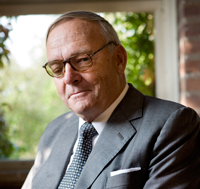 BalticSea2020 was founded by Mr, Björn Carlson through a donation of 500 million SEK. The assets shall finance projects that are action-orientated, innovative and can contribute to improve the knowledge of the Baltic Sea. The Foundations capital shall be used continuously until 2020, hence the name of the Foundation. During the years the market value of the Foundation's financial assets has developed positively, which means that at year-end 2016/2017 there were still approximately 200 million SEK to be granted to projects. Since the Foundation started its work in 2006 the board has granted approximately 650 million SEK to projects within Fishery, Eutrophication and Information. In total the Foundation has initiated nearly 100 projects.
Our vision and program statement
BalticSea2020 aims to contribute to measures to improve the Baltic Sea environment by 2020. This is to be achieved by spending the donation on concrete efforts and active involvement in projects, research and opinion formation.
The first years
Between 2006 and 2007 the BalticSea2020´s board focused on understanding the Baltic Sea’s challenges. In consultation with the Royal Swedish Academy of Sciences a Scientific Advisory Board was established, consisting of eminent scientists. During this period, several projects were generated which purposes were to establish new knowledge but also analyze and summarize existing knowledge. The work resulted in establishing the Foundation’s focus areas - Fishery, Eutrophication and Information.
Program areas
Fishery
In 2007, BalticSea2020 started several research projects that would clarify the role of the fish and fisheries in the Baltic Sea, as well as how management within the EU and in the region could be improved. Since 2008, extensive resources have been invested in disseminating information about the ecological importance of fish in the Baltic Sea, both among politicians and officials, as well as within the European Parliament and the Commission. In 2011, the European Commission presented its proposal for a new fisheries policy (CFP). During the consultation rounds, the foundation worked hard to ensure that future legislation would take ecology and environmental factors into account when managing seas and fish stocks. In total, the foundation met more than 200 politicians from 12 countries.
The reformed CFP came into force in 2014 and expectations for the new fisheries legislation were high, but it soon became apparent that the situation in the Baltic Sea was anything but satisfactory. The recently adopted fishing law began to be watered down; aspects of it were never implemented and of those that were, there are a number that have been ignored by commercial fishing. Perhaps the most flagrant example is the introduction of the discard ban in 2015. Despite the ban, large quantities of perfectly good fish for human consumption are still thrown overboard today. At the same time, major biological and ecological changes were taking place in the Baltic Sea. The cod became smaller and smaller, and it became increasingly difficult to determine the age of individuals – adult cod looked like teenagers, and juveniles looked like herring. Fishermen were unable even to catch their allocated quotas. In recent years, the cod have been forced together, creating a stationary, dwarf stock that is in such poor condition that it is unable to actively pursue its food source.
In order to reverse this negative trend, the Foundation decided to launch a large-scale campaign to inform the public and politicians about the plight of the cod. This campaign continued for most of 2018 and included online activities, prominent advertising, and the publication of a number of opinion editorials. A “Fisheries Brief” was launched, which was in 2018 circulated to approx. 15,000 subscribers. At the same time, almost 70,000 signatures were collected in support of the Baltic cod.
The Foundation also supported a major project called TABACOD (Tagging Baltic Cod), in which researchers attemped to develop a reliable method for determining the age and growth of cod in the Baltic Sea, using a combination of new technology and historical data. The project was being implemented in cooperation with a number of Baltic countries to secure support for the method and its future application. The project made an important breakthrough in 2018 when it was able to report new data and knowledge about the Baltic cod; something that proved crucial in terms of future advice on fishing quotas from the ICES.
To read more about the Foundation’s projects in the Fishery program area, please click here.
Eutrophication
Several of the early scientific projects in the field of eutrophication have contributed to the development and shaping of the Foundation’s position and the restoration projects subsequently approved by the Foundation’s board.
In 2009 the Foundation launched its own long-term project. The project´s first report, “Best practice manure management”, identified anaerobic digestion of pig manure, separation technologies, and active phosphorus management as three methods with the greatest potential for reducing nutrient leaching from industrial livestock farms. This report provided a starting point for the foundation’s demonstration project “Circular manure management programme”. This project showed, through knowledge of cost-effective technologies, a demonstration plant and dissemination of knowledge, that it is possible to carry on industrial livestock farming using a circular system without loss of nutrients (phosphorus and nitrogen) to air and water. During 2013 a project was launched involving a large livestock farm in Poland, with the aim being to process approx. 55,000 m³ of pig manure, which is roughly the amount produced by 60,000 pigs in a year.
The demonstration plant, which includes separation, acidification, closed storage and safe spreading of manure, was completed in autumn 2016. The plant was commissioned in 2017 and a research project was launched in partnership with the Swedish University of Agricultural Sciences (SLU) to collect regular samples in order to measure, evaluate and optimise the plant’s efficiency.
In the autumn of 2010 BalticSea2020 started the large-scale demonstration and research project “Living coast” on Ingarö in the Stockholm archipelago. The aim of the project is to: “Through the introduction of known measures – both on land and in the water – improve the Secchi depth, reduce the growth of algae and increase ichthyofauna in a demarcated but representative coastal area.”
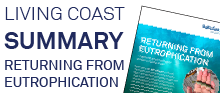
A number of subprojects have been conducted within the master project that are designed to develop and contribute new knowledge. The experience has been summarized in a book that describes how eutrophied archipelago areas can be restored and what it costs. Among other activities, there were trials using aluminium chloride as a precipitation agent for trapping phosphorus in sediment, a variety of measures to prevent phosphorus leaching from nearby horse farms, the establishment of ponds for increased nutrient retention, wetlands to boost stocks of pike, among other species, as well as lime filter ditches, and the structural liming of fields to bind phosphorus. As a result of these efforts, the bay has now achieved “good environmental status”! The project concluded in 2018 with the publication of the book (only in Swedish), and during the second half of that year knowledge and experiences from the project were successfully and effectively disseminated by the project managers to a range of authorities and decision-makers. From 2019 the project Living Coast (II) is led by the Stockholm University Baltic Sea Centre, under the leadarship by Linda Kumblad and Emil Rydin. The work is carried out in close collaboration with BalticSea2020 - initiator and the main financier.
To read more about the Foundation’s projects in the Eutrophication program area, please click here.
Information
One of the foundation’s most public commitments involves Folke Rydén’s and Mattias Klum’s innovative 10-year film project (BASMAP), which is designed to raise awareness among the 90 million people living in the Baltic Sea’s catchment area about the threats and opportunities facing this inland sea, through the medium of five documentaries and two full-length films. A total of five documentaries and two nature films were produced between 2009 and 2018 and shown in 13 countries, both in and outside the EU. The first documentary was about cod fishing in the Baltic Sea, the second the impact of agriculture and livestock farming on the sea, the third environmental toxins, and the fourth how the Baltic Sea is affected by commercial shipping. In 2019 the last film was released. The film is a review on what has happened since the previous four films were made and looks back on the fishery, industrial animal farms and environmental pollutants. Mattias Klum’s first film “The Contemplator” (“Betraktaren”) was shown by SVT in the spring of 2013. A second film “The Young Sea” (“Havets Öga”) was produced during 2018 and was one of the first nature films to depict life above and below the surface of the Baltic Sea.
For each film the Foundation has developed free educational materials that tie each production to a specific topic. For more information about the educational materials, please visit our website in Swedish here. Read more about the project and watch the films at the project webiste here: www.ourbalticsea.com.
In parallel with BASMAP, in 2010 and 2012 the Foundation financed a film project led by Joakim Odelberg documenting the effects of abandoned fishing nets and trawls in the Baltic Sea (so-called ghost fishing). The resulting films were shown in a number of countries around the Baltic Sea and were recognised with several awards.
In May 2013 agreements were signed for the Foundation’s biggest project to date; a total of SEK 100 million was allocated to establish Baltic Eye, in partnership with Stockholm University. The purpose is to: “Strengthen scientific knowledge of the Baltic Sea and provide decision-makers with tools and information for dealing with environmental problems in the inland sea, using long-term analyses, syntheses and evaluations.” The Baltic Eye project is being conducted by seven researchers, who are experts in: the environmental impact of agriculture, drainage basin dynamics, environmental toxins, fish and fishery issues, marine habitats, bottom sediment dynamics, and water exchange and circulation in the Baltic Sea. Since 2019, when the support from BalticSea2020 ended, Baltic Eye has been run by Stockholm University Baltic Sea Center. Please visit Baltic Eye’s website here.
In 2015 the Foundation’s board approved a decision to allocate SEK 85 million to establish a unique knowledge centre for the Baltic Sea at Skansen called the Baltic Sea Science Center (BSSC). Björn Carlson has also personally donated an additional SEK 30 million for the centre’s development. BSSC houses exhibitions, aquariums, classrooms and a laboratory. There are a number of large aquariums where visitors will be able to see fish such as cod, turbot, sea trout and lumpfish, as well as a variety of plant life, and learn more about the marine environment. The educational spaces, which are intended predominantly for secondary school pupils, focus on four different environmental challenges: eutrophication, overfishing, environmental toxins and loss of diversity, and current research and future solutions. There are also teaching areas in the form of classrooms and a laboratory – a place for the next generation to create conditions for a cleaner sea. The content of the exhibitions is chosen in close collaboration with researchers from two of Sweden’s largest universities – Stockholm University (SU) and the Swedish University of Agricultural Sciences (SLU). The centre will be a place where anyone can go to learn more about the unique environment of the Baltic Sea. It will also provide an insight into the difficult situation facing the sea and what we can do together to turn the current trend around and achieve positive results. For more information about the Baltic Sea Science Center, please visit Skansen’s website.
To read more about the Foundation’s projects in the Information program area, please click here.
Read more...
Read more...
Documentaries and films about the Baltic Sea